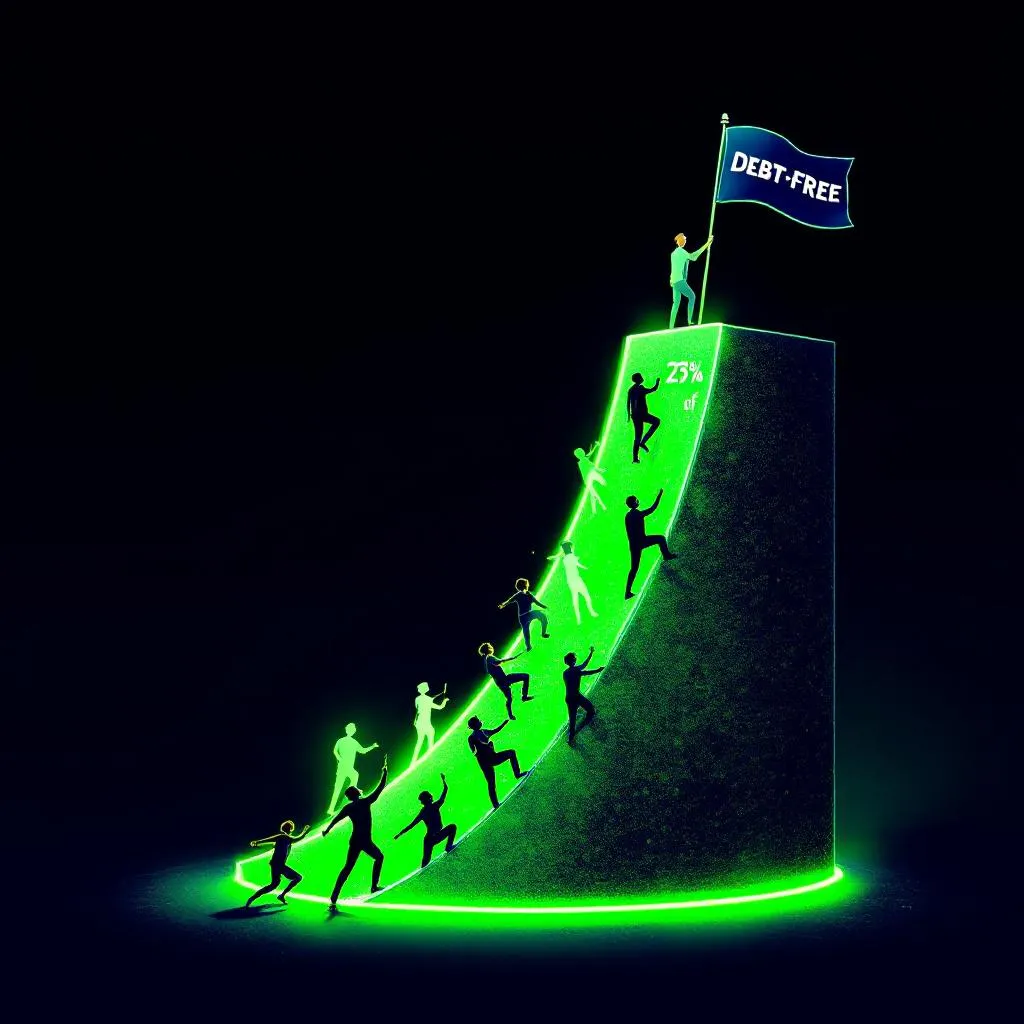
If slaying your debt feels like your central financial mission this year, you’re far from alone. The numbers don’t lie: one out of every four Americans is laser-focused on clearing what they owe, making debt payoff the top financial priority reported in Motley Fool Money’s 2026 New Year Money Resolutions survey. Credit cards, personal loans, those sneaky “buy now, pay later” balances—across the board, erasing debt takes center stage as the most common money goal for 2026.
Dig into the data and the picture gets sharper. Of those chasing a debt-free life, 37% are targeting credit card balances, another 11% have their sights set on personal loans, while 9% are wrangling with lingering BNPL payments. No matter what’s weighing you down, the good news: practical tools exist to ease your journey and chip away the balance—faster, and sometimes at lower cost than you’d expect.
Here are four powerful approaches that can make all the difference.
1. Tap a Balance Transfer Card—Pause the Clock on Interest
Credit card debt is both widespread and punishing, thanks to sky-high interest rates. If those monthly interest charges are the villain in your story, a balance transfer card can be your plot twist.

These special cards let you move your existing card balance onto a new card offering a 0% introductory APR—typically for 12 to 21 months. That means for over a year (sometimes almost two!), every payment you make goes straight toward eliminating the principal. No interest swallowing your progress.
Let’s put that in perspective: Carrying a $6,000 balance? If you pay $300 each month on a 22% APR card, it’ll take you 25 months and burn almost $1,500 just in interest along the way. Now flip the script: transfer to a card with 0% APR for 21 months. Maintain that $300 monthly attack and you’re done in 21 months, with zero interest paid. The only catch? A one-time fee—usually 3% to 5% of the balance. But do the math, and you’ll almost always come out ahead.
It’s worth shopping for the cards with the longest 0% intro period and the lowest fees.
2. Refinance Your Loan if Interest Rates Drop
Took out a personal or auto loan in the past year or two? Odds are, higher rates have been eating at your payoff progress. But if you’ve boosted your credit score—or if rates dip—it might be time to revisit your current loans.
Refinancing could lower your monthly bill or help you pay off the loan faster. Look for options with lower fixed APRs and make sure your current loan doesn’t ding you for prepayment. Simplification is another bonus: rolling multiple loans into one can free up mental space and maybe even cash flow.
With whispers of the Fed cutting rates on the horizon for 2026, keep your eyes peeled. Even shaving 1% off your rate can save you hundreds (sometimes thousands) over your remaining loan term.
3. Consider a Mortgage Recast or Refinance
Mortgages are a marathon, not a sprint. Yet for some, the drive to own their house outright is unshakeable—even if it means biting off a big, long-term goal.
You’ve got options. One lesser-known move: a mortgage recast. Say you come into a chunk of cash—you pay down part of your principal, then ask your lender to ‘recast’ (or reamortize) the loan. Your monthly payments shrink, but your interest rate and loan term stay the same. Usually, the process costs only a modest admin fee.
If interest rates take a significant plunge in 2026, refinancing your mortgage could also make sense. But don’t skip the math: closing costs can be steep, and your break-even point depends on how long you plan to keep the home.
Both strategies can trim your monthly spend and free up budget to attack your principal or chase other financial dreams.
4. Work with a Nonprofit Credit Counselor
Let’s be honest: sometimes debt looks overwhelming from the very start. Where to begin?
This is where a nonprofit credit counselor proves invaluable. Accredited organizations like Money Management International and members of the National Foundation for Credit Counseling (NFCC) help you create a custom payoff plan—often at little or no cost. They can set you up with structured Debt Management Plans, which consolidate payments and negotiate on your behalf. I’ve spoken with these folks—they’re dedicated, knowledgeable, and life-changing for people who feel stuck.
No shame in seeking help. Just make sure you team up with reputable, certified organizations.
Make 2026 the Year You Move Ahead
There’s no secret passage or quick fix. Getting out of debt requires commitment, discipline, and a willingness to make hard choices. But the path doesn’t have to be a slog. The right tools—especially those that cut interest and simplify payments—offer real advantages.
Credit card balances often pose the toughest challenge, and a well-chosen balance transfer card could be your best, swiftest escape.
Take action: research the best cards and strategies, and step into 2026 ready to put your debt behind you for good.
About the author: Joel O’Leary has spent years making personal finance clear and practical, from investing to mortgages and beyond. His background blends firsthand experience—think buying a rental property at eighteen—with a knack for helping everyday people make smarter money moves. When Joel’s not writing, you’ll find him by the ocean, or with his family.