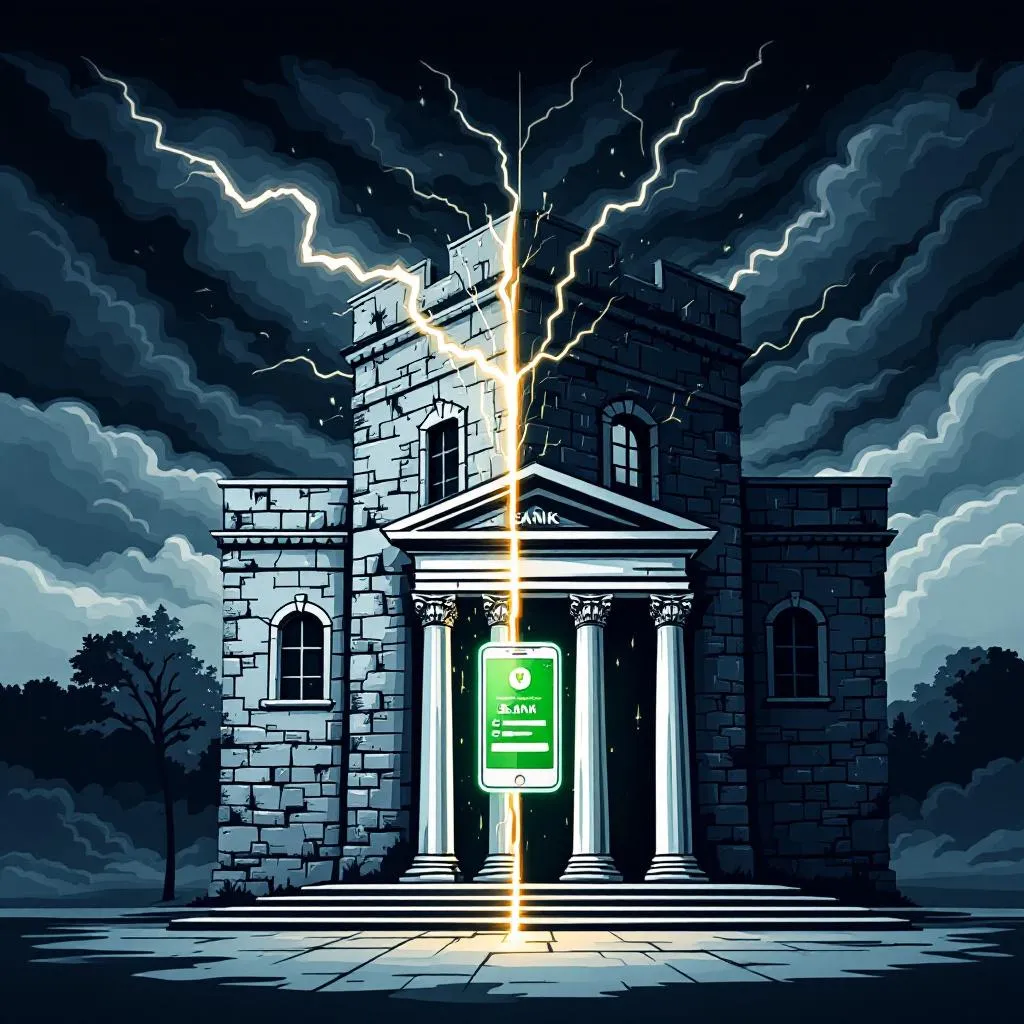
Walk through any American suburb, and you’ll notice the quiet transformation happening on Main Street. Bank branches that once anchored strip malls are closing at a record pace—roughly 2,500 shuttered in 2025 alone—while digital-only banks are adding millions of customers without a single ATM to their name.
The Numbers Tell the Story
Chime, SoFi, and Marcus by Goldman Sachs collectively hold over 30 million accounts, a number that’s grown 40% in just two years. These neobanks attract customers with no-fee checking, early direct deposit, and savings rates that consistently beat brick-and-mortar competitors by a full percentage point or more. For millennials and Gen Z—demographics that have never known a world without smartphones—the value proposition is obvious.
Why Branches Still Matter
Yet the obituary for the physical branch may be premature. Complex financial needs—business lending, estate planning, mortgage closings—still benefit from face-to-face interaction. And for older Americans and underbanked communities, branches provide access that apps alone cannot replicate. JPMorgan Chase, notably, is still opening new branches in underserved markets even as it closes others.
The Hybrid Future
The most likely outcome isn’t a winner-take-all scenario but a hybrid model. Banks are shrinking their branch footprints while transforming remaining locations into “advice centers” focused on high-value services. Meanwhile, digital banks are adding human touches—phone-based financial coaching, video consultations—that blur the line between virtual and physical banking. The competition is forcing innovation on all sides, and the ultimate winner is the consumer.

What This Means for Your Money
If you’re still banking exclusively at a traditional branch, you’re likely leaving money on the table. Shopping rates, comparing fee structures, and considering a split strategy—digital for daily banking, traditional for complex needs—has never been more worthwhile. The banking landscape is shifting fast, and the customers who adapt will benefit most.